


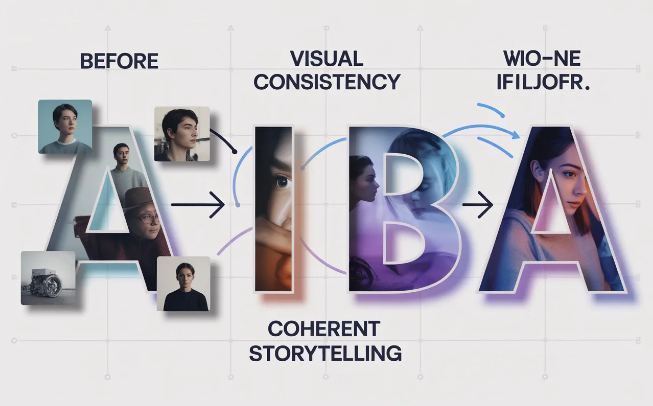
Visual consistency has become one of the most important benchmarks for evaluating modern AI-driven image generation. As generative systems move from producing one-off visuals to supporting long-form storytelling, campaigns, and multi-asset workflows, the ability to maintain coherence across images matters more than raw creativity alone. A visually consistent output builds trust, recognizability, and narrative clarity—qualities that were once difficult for AI systems to achieve at scale.
In the past, image generators often struggled with continuity. Characters would subtly change from one frame to another, lighting would shift unpredictably, and environments would lose spatial logic across iterations. These issues limited the usefulness of AI-generated visuals for professional and semi-professional workflows. Recent advances, however, suggest a meaningful shift in how consistency is approached at the system level.
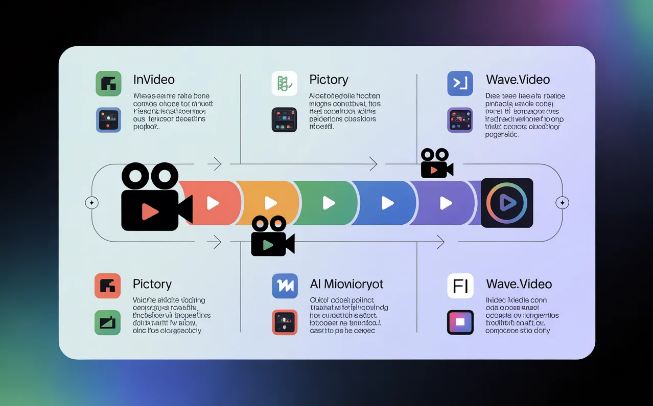
One example frequently discussed in this context is the flux AI image generator, particularly when used within broader creative ecosystems such as Invideo. Its approach highlights how visual consistency is no longer treated as an afterthought, but as a core design principle that influences how images are generated, refined, and reused across different creative needs.
Why Visual Consistency Matters More Than Ever
Visual consistency is not just an aesthetic preference; it is a functional requirement. When images are part of a sequence—such as a story, brand narrative, or instructional flow—small inconsistencies can break immersion and reduce credibility.
Consistency as a Narrative Anchor
In storytelling, consistency helps audiences follow characters, settings, and emotional cues. A character who subtly changes facial structure or clothing details across scenes can feel disjointed, even if each image looks impressive on its own. Consistent visuals act as an anchor, allowing viewers to focus on the story rather than on visual discrepancies.
The Professional Use Case Shift
As AI-generated images move into professional workflows, expectations rise. Designers, marketers, and content creators need images that work together, not just individually. Visual consistency enables reuse, adaptation, and expansion of assets without starting from scratch each time.
Cognitive Load and Viewer Trust
From a psychological perspective, consistency reduces cognitive load. When viewers recognize recurring visual elements, they process information faster and with more confidence. This is especially important in digital environments where attention is limited and clarity is critical.
How Flux AI Image Generator Approaches Consistency at the System Level
The flux AI image generator represents a shift in how AI systems handle continuity. Instead of treating each image as an isolated output, it emphasizes context awareness and persistent visual logic across generations. When paired with Invideo’s image workflows, this approach becomes more evident in practical use.
Character Consistency Across Variations
One of the most notable strengths lies in maintaining character identity. Facial features, proportions, and defining traits remain stable even when prompts evolve. This allows creators to place the same character in different scenarios without losing recognizability, a challenge that previously required extensive manual correction.
Context Awareness in Scene Construction
Beyond characters, environmental consistency plays a crucial role. The system accounts for spatial relationships, lighting direction, and background elements so that scenes feel connected rather than randomly assembled. This context awareness reduces the need for repeated prompt adjustments and trial-and-error iterations.
Precision Local Editing
Another key factor is precision editing at a local level. Instead of regenerating entire images to make small changes, localized adjustments allow creators to refine specific areas while preserving the rest of the composition. This reinforces consistency by minimizing unintended alterations elsewhere in the image.
The Role of Contextual Memory in Image Generation
Consistency is closely tied to how well an AI system “remembers” prior outputs. While not memory in a human sense, contextual reference mechanisms help maintain continuity across generations.
Persistent Visual Attributes
Visual attributes such as color palettes, textures, and stylistic cues often define the identity of a project. When these attributes persist across images, the output feels cohesive. Systems that prioritize attribute persistence reduce the risk of visual drift over time.
Prompt Interpretation Over Time
Consistency also depends on how prompts are interpreted across multiple generations. Subtle wording changes should not lead to drastic visual shifts unless intentionally requested. Stable prompt interpretation allows creators to iterate confidently without fearing unpredictable results.
Iterative Refinement Without Resetting the Style
A major advantage of consistency-focused systems is the ability to refine images iteratively. Creators can evolve a visual idea step by step, maintaining the core style while improving details, rather than restarting the creative process with each revision.
Visual Consistency Beyond Still Images
While the focus is often on images, consistency has broader implications when visuals are used alongside motion and multimedia content.
Bridging Images and Motion
Consistent images serve as strong foundations for motion-based content. When visuals align in style and structure, they can be more easily adapted into sequences, transitions, or animated formats without extensive rework.
Alignment With AI Video Apps
In workflows that involve AI video apps, visual consistency becomes even more critical. Images that share characters, environments, and stylistic cues can be seamlessly integrated into short videos, explainers, or narrative clips, creating a smoother transition from static to dynamic content.
Reducing Production Friction
When consistency is built into image generation, downstream production becomes more efficient. Less time is spent correcting mismatches, and more time can be devoted to storytelling, pacing, and messaging.
The Balance Between Creativity and Control
One of the long-standing tensions in AI image generation is the balance between creative freedom and controlled output. Consistency does not mean uniformity; it means coherence within variation.
Structured Flexibility
A consistency-driven approach allows for controlled experimentation. Creators can explore new poses, lighting conditions, or moods while retaining the core visual identity. This structured flexibility supports both exploration and reliability.
Avoiding Over-Constraint
Too much rigidity can limit creative expression. The strength of modern systems lies in allowing variation where it adds value, while constraining elements that define identity. This balance ensures that outputs feel fresh without becoming inconsistent.
Supporting Creative Intent
Ultimately, consistency should serve creative intent rather than override it. Systems that interpret prompts with nuance and respect established context empower creators to guide the outcome rather than react to it.
Why Consistency Changes How Creators Work
The practical impact of visual consistency extends beyond technical quality; it reshapes creative workflows and decision-making.
Faster Concept Development
When creators trust that visual elements will remain consistent, they can move faster from concept to execution. This reduces hesitation and encourages experimentation within a stable framework.
Easier Collaboration
Consistent visuals make collaboration smoother. Teams can work with shared assets knowing that new outputs will align with existing ones, reducing miscommunication and revision cycles.
Long-Term Asset Value
Images that maintain consistency over time have greater long-term value. They can be reused, adapted, and expanded as projects evolve, supporting sustainable content creation rather than one-off outputs.
Looking Ahead: Consistency as a Baseline Expectation
As AI image generation continues to mature, visual consistency is likely to shift from a differentiator to a baseline expectation. Creators will increasingly judge systems not just by how impressive a single image looks, but by how reliably multiple images work together.
The conversation around the flux AI image generator, especially when integrated into platforms like Invideo, reflects this broader trend. Consistency is no longer treated as a constraint on creativity, but as an enabler of deeper, more coherent visual storytelling.
In the future, the most effective generative systems will be those that understand context, preserve identity, and adapt gracefully to creative evolution. Visual consistency will remain at the heart of that progress—quietly shaping how AI-generated imagery is created, refined, and experienced.